 Wrenfield Journal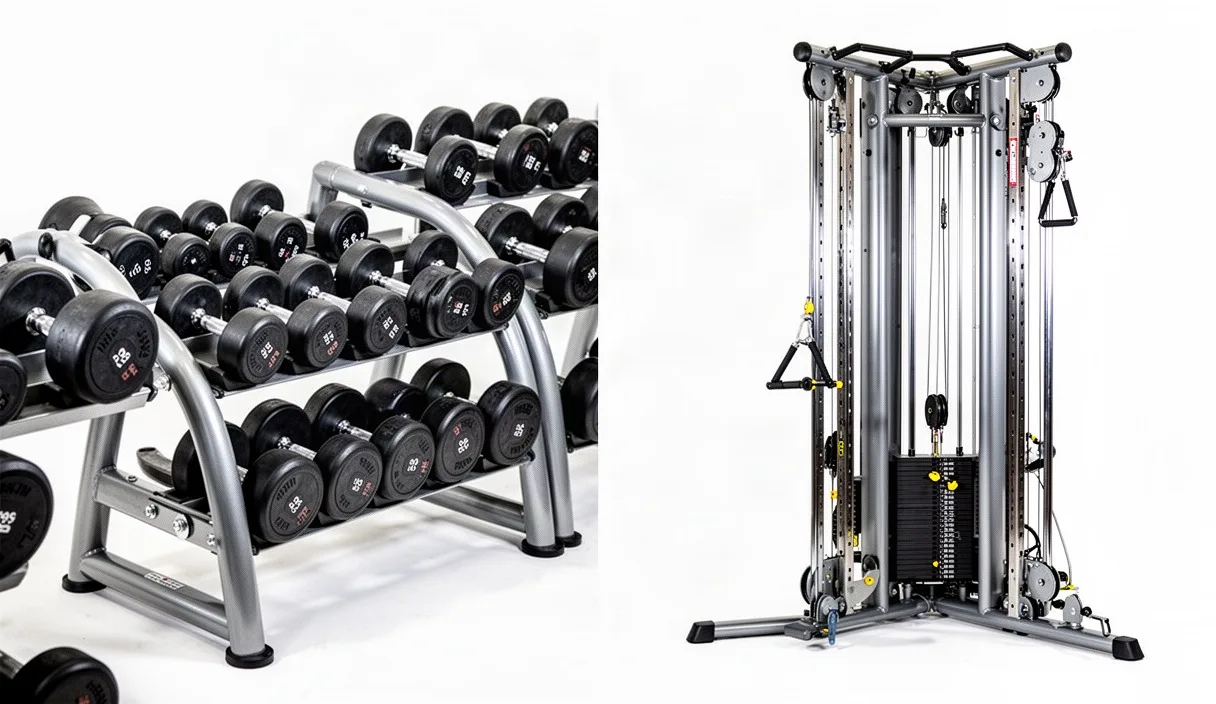
A gentleman who returns to the gym after a decade away is often confronted, within his first ten minutes on the floor, with a question that never troubled him at twenty-two: should the hour be spent among the barbells and dumbbells, or upon the padded machines that line the far wall? The answer is rarely absolute, and it depends a good deal on the state of one's joints, the shape of one's week, and the honesty with which one assesses one's own technique. This article sets out the practical differences between the two approaches and offers a reasoned way to use both.
We will proceed from first principles, namely what each tool actually does to the body, then move toward the more delicate matters of joint wear, time management, and the particular needs of a man resuming training in his thirties or forties. Throughout, the counsel is practical rather than doctrinal: neither camp deserves blind loyalty, and a professional trainer or physiotherapist should be consulted for any pain that persists beyond ordinary muscular soreness.
What Free Weights Offer
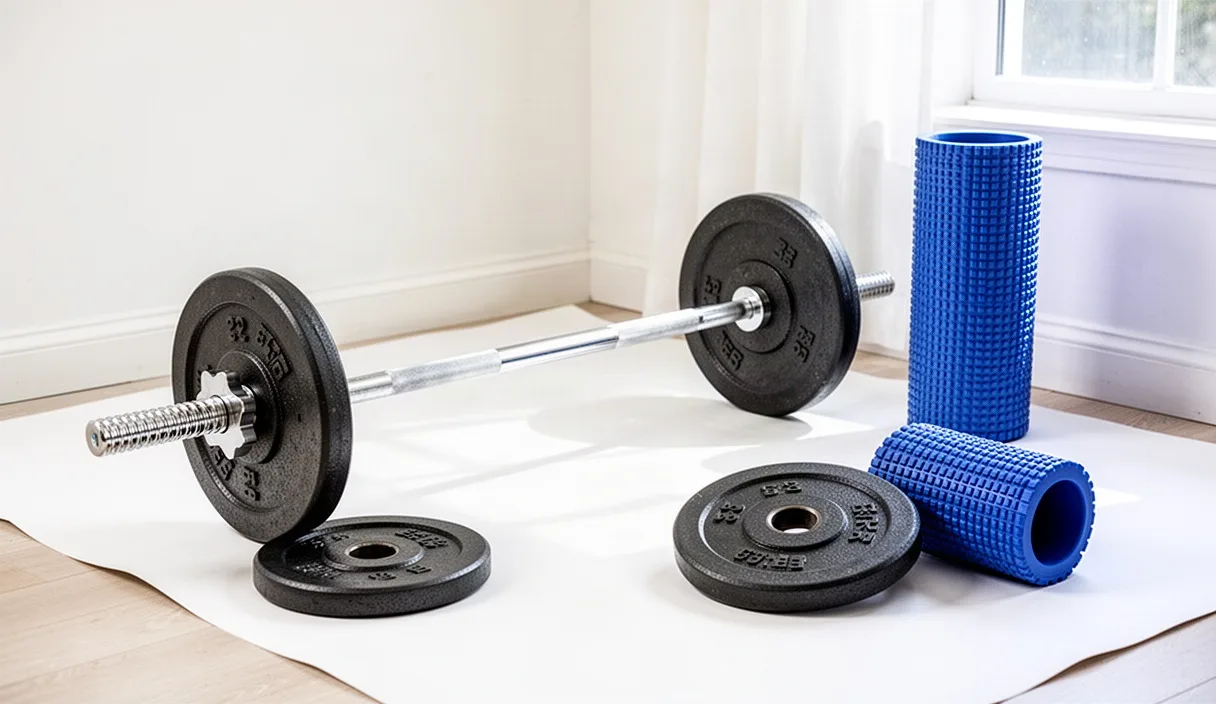
Free weights, meaning barbells, dumbbells, and kettlebells, require the body to stabilise the load through its own effort. A dumbbell press, unlike its machine equivalent, demands that the shoulder, elbow, wrist, and trunk all coordinate to keep the bar path steady. This recruitment of smaller stabiliser muscles is one of the principal arguments in favour of free weights for men past thirty, since strength gained here tends to transfer more directly to daily tasks such as carrying luggage, lifting a child, or shifting furniture.
A second advantage lies in the breadth of movement patterns available. Free weights permit exercises such as the deadlift, the goblet squat, and the farmer's carry, none of which have a true machine equivalent. A man training three times weekly might structure a session around five compound lifts: a squat variation, a hip hinge, a horizontal press, a vertical pull, and a carry. Each addresses a different plane of movement and, taken together, they build a more rounded foundation than isolated machine work alone.
Free weights also allow unilateral training, meaning one limb at a time, which is particularly useful for a man who notices asymmetry between his left and right sides after years of favouring one arm in sport or occupation. A single-arm dumbbell row, for instance, will expose and gradually correct such imbalances in a way a seated row machine, which often permits the stronger side to compensate, cannot.
The chief disadvantage is technical demand. Learning to deadlift correctly, for example, typically takes several sessions of coaching or careful self-study, and a poorly executed lift carries real risk to the lower back. A man new to barbell work would do well to begin with an empty bar, or a light kettlebell, and to spend two or three weeks grooving the movement pattern before adding meaningful load.
What Machines Offer
Machines guide the body along a fixed path, which removes much of the balance and coordination burden that free weights impose. This makes them a sensible entry point for a man who has not trained in years and whose proprioception, the body's sense of its position in space, may have grown rusty. A leg press machine, for instance, allows loading of the quadriceps and glutes without the technical coaching that a barbell squat requires.
Because the resistance curve on many machines is designed to match the strength curve of the target muscle, machines can also permit safer training to a high level of fatigue. A man wishing to take a set of leg extensions close to failure faces little risk of dropping a weight on himself, whereas the same approach on a barbell squat would be unwise without a spotter or safety rack.
Machines are additionally useful for isolating a muscle that free weight compounds do not sufficiently challenge. A man with a chest press practice that leaves his triceps under-worked might add a cable triceps pushdown or a dip machine to address the gap directly. Some examples of common machine categories and their typical use:
- Leg press: loads the lower body with reduced spinal compression compared to a back squat.
- Lat pulldown: builds pulling strength for a man not yet ready for a bodyweight pull-up.
- Chest press: offers a stable pressing pattern for those with shoulder sensitivity.
- Seated cable row: trains the mid-back with a fixed, controlled path.
The limitation of machines is that fixed paths do not always match an individual's own joint geometry. A man with unusually long arms may find a particular chest press machine places his shoulders in an uncomfortable position, and no amount of adjustment corrects this, since the pivot point is set by the manufacturer for an average build.
Joint Health and Injury Considerations After 30
By the fourth decade, most men carry some accumulated wear: a shoulder that clicks, a knee that aches faintly on cold mornings, a lower back that once suffered a strain in a rugby match twenty years prior. This history matters more in exercise selection than raw ambition does. Free weight compound lifts, while valuable, place greater demand on joint stability, and a man with a known lower back issue may find that a trap bar deadlift, which places the load closer to the body's centre, is more forgiving than a conventional barbell deadlift.
Machines, by removing the stabilisation requirement, often permit training around an injury rather than through it. A man recovering from a mild rotator cuff strain, for example, might substitute a chest press machine for a barbell bench press for several weeks, since the fixed bar path reduces the erratic shoulder movement that free weights can introduce. This should not be taken as medical guidance; any man with a diagnosed injury should have his program reviewed by a physiotherapist or sports physician before resuming heavy training.
There is also the matter of joint loading over the course of a week. A reasonable approach for a man in his late thirties training four days weekly might alternate a free weight lower body day with a machine-supported lower body day, giving the knees and hips a varied stimulus rather than repeatedly stressing the same structures in the same way.
Warm-up practice becomes more important with age regardless of the tool chosen. A ten-minute warm-up including light cardiovascular work and two or three progressively heavier warm-up sets before the working weight is a sensible minimum, and this applies equally to a squat rack and to a leg press machine.
Time Efficiency for Busy Schedules
A man balancing a demanding career and family obligations often has forty-five minutes, not ninety, for a gym visit. Machines tend to be faster to set up: a pin adjustment takes seconds, whereas loading and unloading a barbell for a squat, then re-racking plates, can consume several minutes per set. Over a session of six exercises, this difference can add up to ten or fifteen minutes.
Free weights, however, often allow supersetting, meaning two exercises performed back to back with minimal rest, using equipment that does not require a queue. A dumbbell set rarely has a waiting line the way a single leg press machine in a busy gym might. A time-pressed man could pair a dumbbell bench press with a dumbbell row, completing both in the time a single machine exercise with a queue might take.
The following comparison illustrates typical time costs for a six-exercise session:
| Factor | Free Weights | Machines |
|---|---|---|
| Setup time per exercise | 2 to 4 minutes | Under 1 minute |
| Likelihood of equipment queue | Low, if racks are shared | Moderate to high in peak hours |
| Superset feasibility | High | Depends on gym layout |
| Learning curve for new exercises | Several sessions | Minutes |
A pragmatic solution for the busiest weeks is to plan the session around whichever tool the home or nearby gym has in immediate, uncontested access, rather than insisting on a particular ideal that the day's schedule cannot accommodate.
Which Option Suits Beginners Returning to Training
A man returning to the gym after, say, fifteen years away is not a true beginner in the biological sense, since his frame has already matured, but he is a beginner in terms of current strength and coordination. For such a man, machines offer a gentler reintroduction: the fixed path reduces the chance of injury while the body relearns basic effort and recovery patterns. A sensible first month might rely on machines for perhaps two-thirds of total volume, with free weights introduced gradually.
A practical four-week reintroduction plan might look like this:
- Week one: two full-body machine sessions, light loads, focus on range of motion.
- Week two: introduce dumbbell goblet squats and dumbbell rows alongside continued machine work.
- Week three: add a light barbell exercise, such as an empty-bar squat or a trap bar deadlift with modest plates.
- Week four: assess soreness and joint comfort, then decide whether to increase free weight proportion or remain machine-dominant a while longer.
Men who already possess a training history, perhaps from years of amateur sport, often tolerate a faster reintroduction to free weights, since the underlying movement patterns, though rusty, return more quickly than they would for someone entirely new to structured exercise.
How to Combine Both in a Single Program
The most sensible position, for the majority of men in this age bracket, is not a choice between free weights and machines but a deliberate combination. A common and effective structure places compound free weight lifts, such as a squat, a deadlift variation, and a press, early in the session while energy and coordination are freshest, then follows with machine-based accessory work, such as leg extensions, cable rows, or a chest press machine, once the body is warmed and the risk of technical breakdown from fatigue is more manageable.
A sample weekly structure for a man training three times per week might allocate free weight compounds on Monday and Thursday, with a lighter, machine-dominant session on Saturday focused on accessory volume and joints that need a gentler stimulus that week. This rotation allows heavy neurological demand on two days and recovery-friendly volume on the third.
Progress tracking benefits from writing down both the free weight loads and the machine pin settings in a simple notebook or phone app, since machines are easy to forget between visits given their numbered rather than plate-based loading.
Common Mistakes
Many men abandon free weights too soon after a single uncomfortable session, when the actual issue was insufficient warm-up or overly ambitious starting load. Others remain on machines indefinitely out of comfort, missing the functional carryover that compound free weight movement offers. A further frequent error is ignoring machine seat and pivot adjustments, using a setting left by the previous user rather than tailoring the machine to one's own limb length, which can place unnecessary strain on the joint being trained.
Next Steps
A man deciding between these approaches would do well to spend his first two weeks back in the gym on a blend weighted toward machines, then gradually introduce free weight compounds as confidence and coordination return. Anyone with existing joint pain, a prior injury, or uncertainty about correct technique should arrange even one or two sessions with a qualified trainer, and should consult a physician before beginning any new strength program, particularly if there has been a long absence from structured exercise.